Mental Health at University: Facts, Warning Signs and Immediate Help
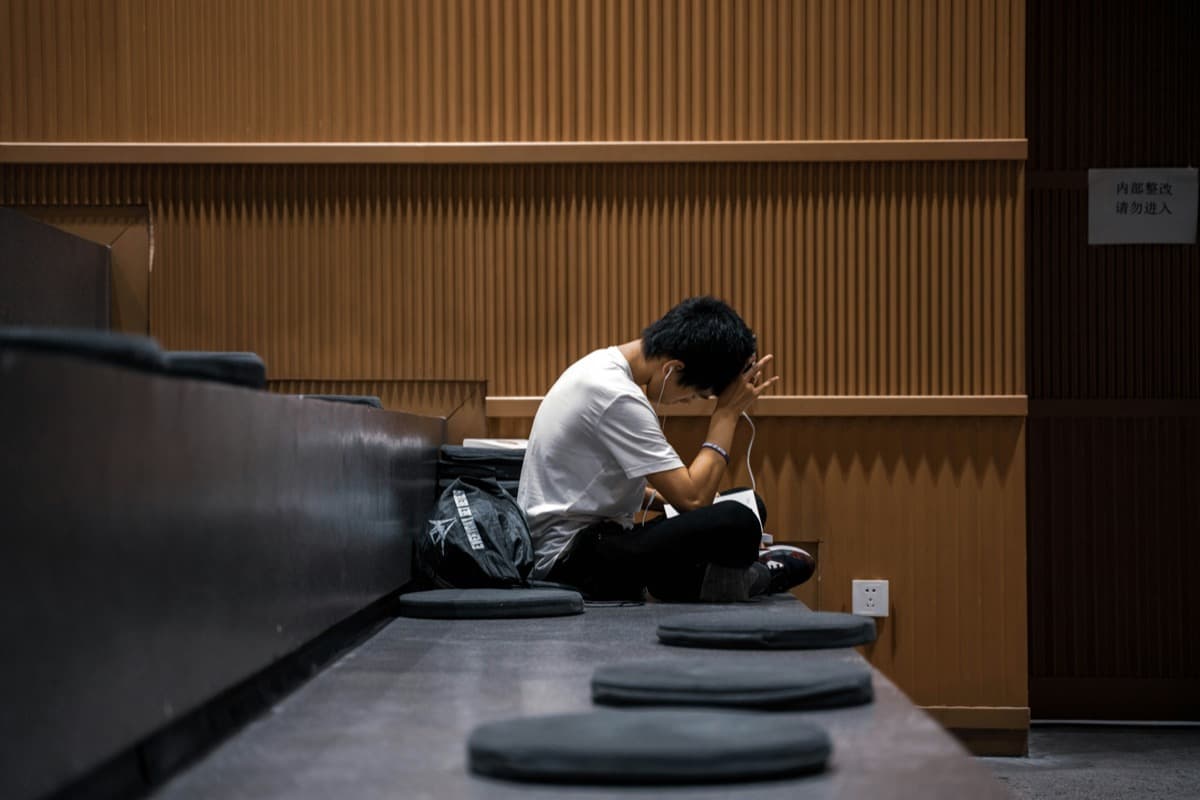
56.7% of students rate their mental health as "not good" or "poor", according to the Mental Health Barometer 2025 by Instahelp and Studo (Austria & Germany, n=6,080). Who is behind this number, what causes it, and what actually helps right now. This is no longer a fringe issue.
This article explains the causes, presents the data, and outlines concrete support options, including those available without a waiting list.
How burdened are students really?
The figures from the TK Health Report 2023 (PDF) (TK is Germany's largest public health insurer) are striking (overview: tk.de):
| Symptom | Share Affected | Comparison 2015 |
|---|---|---|
| Exhaustion from stress | 68% | 44% |
| Anxiety and worry | 63% | – |
| Concentration difficulties | 53% | 21% |
| Frequently stressed | 44% | approx. 23% |
| Sleep problems | 43% | – |
The Mental Health Barometer shows a trend that has continuously worsened since 2023. In 2025, 56.7% of students rated their mental health as poor, a new high since the survey began.
According to the BARMER Physician Report 2018 (BARMER is one of Germany's major public health insurers), one in six students (17%) already had a documented mental health diagnosis at that time, with the trend rising since. A new DZPG research consortium (January 2026) is investigating student mental health in Germany. Its starting point includes evidence that in some academic disciplines, up to 25% of students show depressive symptoms and around one third experience anxiety disorders.
Exam stress, loneliness, self-doubt: five common burdens
Stress at university rarely comes from a single source. Five factors stand out particularly in the research.
Exam stress and performance pressure
51% of students name exams as their biggest stressor, 28% fear poor grades, according to the TK Health Report 2023. Structural factors make this worse: BAföG (Germany's student financial aid) is often tied to staying within the standard duration of study, and a leave of absence interrupts both. Academic failure can mean losing your funding.
Loneliness and social isolation
46% of 16- to 30-year-olds feel lonely, particularly those aged 19 to 22, according to the Bertelsmann Foundation in 2024. Young adults were identified as a new at-risk group. The Federal Institute for Population Research confirms that loneliness among young adults has measurably increased in recent years. University, long seen as a social experience, increasingly isn't one for many.
Self-doubt and the impostor phenomenon
Impostor syndrome, the feeling of not deserving one's own success, is widespread. Among students, it's particularly common, as a study from Martin Luther University Halle shows. First-generation university students are particularly affected. Without role models who've completed a degree, the sense of not belonging runs deeper.
Overload from multiple burdens
63% of students work alongside their studies, averaging 15 hours per week. 37% have less than €800 per month, according to the 22nd Social Survey of the Deutsches Studentenwerk. 33% name this combination as a major stressor. University, job, household, social life: this isn't an exception, it's the norm.
Exhaustion and burnout risk
One in three students is at risk of burnout according to TK data. Emotional exhaustion is the core symptom: it has increased by 48% since 2017. Exhaustion is not a sign of weakness. It's a sign that too much is being asked.
If you recognize yourself in one or more of these descriptions, that's a signal worth taking seriously.
When does stress become a problem? Recognizing warning signs
Some stress is normal. Sustained burden is not. These eight warning signs indicate when professional support makes sense:
- Exhaustion that doesn't improve with sleep
- Persistent rumination and circular thinking lasting more than two weeks
- Withdrawal from friends, family, or social activities
- Concentration and memory difficulties in everyday life
- Physical symptoms such as headaches, stomach problems, or sleep disturbances
- Persistent feelings of emptiness or joylessness
- A sense of being fundamentally unable to cope with demands
- Thoughts such as "I can't go on" or "Nothing matters anymore"
Important: If you are having thoughts of harming yourself or no longer wanting to live, please contact the crisis helpline immediately: 0800 111 0 111 (free, 24/7) or go to your nearest psychiatric emergency department.
The biggest barrier to getting help is often self-assessment. A 2025 study by the DZPG and the JEPSY initiative found that 42.6% of 16- to 25-year-olds do not seek professional help despite recognizing their own need. The most common reason: "Not serious enough." This self-assessment is the biggest barrier.
If you're unsure whether your situation is "serious enough," that uncertainty itself is a good reason for a first conversation. At Psychofit, the first session costs €25.
For a detailed explanation of the difference between psychological counseling and psychotherapy, see our dedicated article.
Persistent concentration problems are not always about stress. Some students only receive an ADHD or autism diagnosis at university, because that is where the demands first outrun the coping strategies they had built. Our article What is neurodivergence? explains what the term covers.
142 days waiting: why the system is failing students
Even when students take the step and seek help, many hit the same wall: waiting times.
According to the Federal Chamber of Psychotherapists (BPtK), patients in Germany wait an average of 142.4 days between their initial consultation and the start of psychotherapy. A BPtK background paper from 2023 shows that 47.4% of practices have waiting times of more than six months. In rural areas, this rises to four to six months; in cities, it's around two months.
University student services centers (Studentenwerke) are also reaching their capacity limits. While 45 of 58 Studentenwerke operate their own psychological counseling centers, capacity falls far short of demand: waiting times range from four to nine weeks, with a maximum of three to five sessions. Demand has grown continuously in recent years. As one example, Studentenwerk Schleswig-Holstein documented a 34% increase from 2022 to 2023 alone.
The result: those who seek help often can't find it in time. The problem isn't a lack of willingness. There simply aren't enough accessible options.
For a detailed analysis, see our article: 142 Days Waiting for Therapy: Why the System Is Overwhelmed.
What support options exist? An honest comparison
| Option | Cost | Waiting time | Scope | Best suited for |
|---|---|---|---|---|
| University student services counseling | Free | 4–9 weeks | Max. 3–5 sessions | Initial orientation, all students |
| Psychotherapeutic consultation (public insurance) | Free | 2–6 weeks | 1–6 sessions | Initial assessment of whether therapy is needed |
| Outpatient psychotherapy (guideline-based) | Free (public insurance) | Avg. 142 days | 12–80 sessions | Clinically diagnosed condition |
| Online counseling at Psychofit | €39/session (students with proof) | Immediately | As needed, you decide frequency and number of sessions | All burdens, bridging, no diagnosis needed |
| DiGA apps (e.g. Selfapy, HelloBetter) | Free with public insurance (diagnosis + prescription required) | Immediately after prescription | Program-based | Only with specific publicly insured diagnosis |
| Crisis helpline (0800 111 0 111) | Free | Immediately | Unlimited, 24/7 | Acute crisis |
Psychological counseling, as offered by Psychofit, is not therapy. It's for people who feel overwhelmed in everyday life, who need support processing their thoughts, or who want to bridge the wait for a therapy spot. For clinical conditions, psychotherapy is the right path.
Psychological counseling at Psychofit is open to everyone who doesn't want to wait months. All counselors hold at least a B.Sc. in Psychology and work under the supervision of licensed psychotherapists. You decide how many sessions you need and how often. First session: €25. Follow-up sessions: €49 standard, €39 for students with proof of enrollment.
Further reading:
- The difference between psychological counseling and psychotherapy
- What does therapy cost in Germany?
- The scientific basis of the Psychofit model
Five steps you can take today
- Honest self-assessment. If at least three of the warning signs from the warning signs list above apply to you, professional support makes sense.
- Check your university's student services counseling center. Search for "psychological counseling center" and the name of your university. Plan for waiting times of four to nine weeks.
- Use immediate options. Online counseling like Psychofit (€39 per session for students with proof of enrollment) or DiGA programs like Selfapy or HelloBetter (free with public insurance, requires diagnosis and GP prescription).
- Talk to someone you trust. Not to find solutions, but to break through isolation.
- In an acute crisis: Crisis helpline 0800 111 0 111 (free, 24 hours a day) or your nearest psychiatric emergency department.
Don't want to wait any longer? Psychofit offers psychological counseling by video, available immediately, no waiting time. €39 per session for students with proof of enrollment. Backed by a money-back guarantee on every session: if a session isn't right for you, we'll refund it.
And if you want to understand why the waiting time for psychotherapy averages 142 days, we've written a detailed analysis.
Frequently asked questions
How many students in Germany have mental health problems?
56.7% of students rate their mental health as "not good" or "poor" (Mental Health Barometer 2025). As early as 2018, one in six students (17%) had a documented mental health diagnosis (BARMER Physician Report), with the trend rising since.
Where can I find psychological help quickly as a student?
Three options are available immediately: your university student services counseling center (waiting time four to nine weeks), online counseling like Psychofit (immediately available, €39 per session with proof of enrollment), or in a crisis the helpline at 0800 111 0 111. A full comparison of all options is in the section above.
What's the difference between psychological counseling and psychotherapy?
Psychological counseling supports people with psychological burdens who don't have or need a clinical diagnosis. Psychotherapy is for people with mental illness. The psychotherapeutic consultation (up to 6 short sessions, covered by public insurance) is accessible without a diagnosis and serves as an initial assessment. Long-term therapy (guideline-based psychotherapy) requires a diagnosis and takes an average of 142 days to start. More detail: Psychological Counseling vs. Psychotherapy.
What does psychological counseling cost for students?
At a Studentenwerk it's free, but limited to three to five sessions and involves a waiting period. Online counseling at Psychofit costs €25 for the first session and €39 for follow-up sessions with proof of student enrollment. Private practices charge €80 to €150 per session. More detail: What does therapy cost in Germany?.
Is there a money-back guarantee?
Yes. Psychofit's money-back guarantee applies to every session: if a session isn't right for you, we'll refund it, no questions asked. Details on the homepage.
Is stress at university normal, or should I seek help?
Some level of stress is normal. When it persists, causes physical symptoms, limits daily functioning, or leaves you feeling chronically exhausted, that's a signal. The warning signs list earlier in this article can help you assess your situation.
How long will I wait for a therapy spot?
An average of 142 days (BPtK). In rural areas often four to six months. In cities around two months. More detail: 142 Days Waiting for Therapy.
Will psychotherapy affect my career or civil service eligibility?
Psychological counseling, as offered by Psychofit, is not entered in your medical record, since there is no illness context. For psychotherapy, some German states have adjusted their civil service eligibility rules in recent years. The exact legal situation varies by state. For specific questions, individual legal advice is recommended.
Can I do psychological counseling online?
Yes. Studies show that synchronous video counseling is similarly effective to in-person formats. A meta-analysis by Cerolini et al. (2023), covering 152 studies, confirms this for university counseling contexts. More on the scientific basis: The Psychofit model in a research context.
Sources
- TK Health Report 2023: tk.de
- TK Report PDF: tk.de (PDF)
- Mental Health Barometer 2025: presseportal.de
- BARMER Physician Report 2018: barmer.de
- DSW 22nd Social Survey: studierendenwerke.de
- DZPG Research Consortium 2026: dzpg.org
- DZPG/JEPSY Treatment Gap 2025: dzpg.org
- BPtK 142 Days: bptk.de
- BPtK Background Paper 2023: bptk.de (PDF)
- Studentenwerk Schleswig-Holstein: studentenwerk.sh
- DSW Psychological Counselling Services: studierendenwerke.de
- Bertelsmann Foundation Loneliness 2024: bertelsmann-stiftung.de
- Federal Institute for Population Research: bib.bund.de
- IDW-Online Impostor Syndrome: idw-online.de
- Cerolini et al. 2023: mdpi.com
All information in this article has been carefully researched but is provided without guarantee. Prices, waiting times, and legal regulations are subject to change. Last updated: March 2026.